Millions of athletes and active people experience preventable ankle injuries each year that vary in severity. The ankle joint bears your full weight during every step, jump, and directional change. Protecting your ankle should be a top priority for any active person.
Ankle supports have evolved significantly over the years from bulky, uncomfortable wraps into sleek, performance-friendly devices that fit naturally and comfortably into any athletic routine without restricting movement. This guide explains why ankle supports matter, who benefits most from them, and what distinguishes a great product from a poor one.
Why Ankle Support Is More Than Just a Precaution
Most people assume ankle braces are only necessary after an injury occurs. That belief overlooks the broader reality of ankle support. Wearing proper support acts as a preventive shield, reinforcing the ligaments and tendons that hold the joint in place during high-stress activities.
It is worth considering that even a single rolled ankle can result in weeks of rehabilitation, considerable lost training time, and a markedly higher likelihood of re-injury further down the road. Prevention, which addresses potential injuries before they ever occur and spares the body from the toll of prolonged rehabilitation, always costs far less than recovery, both in terms of the physical demands placed on the athlete and the financial burden that treatment inevitably brings.
The Hidden Cost of Ignoring Joint Stability
Athletes who skip protective gear often pay a steep price. Chronic ankle instability, a condition where the joint repeatedly gives way, affects roughly 20 percent of people who experience even a single moderate sprain. This ongoing weakness can alter your gait, strain your knees, and eventually cause hip or lower back problems. An innovative ankle brace addresses these concerns by providing dynamic stabilization that responds to your movement patterns rather than simply restricting motion. The goal is not to lock the joint in place but to give it intelligent reinforcement during risky movements.
Beyond Sports: Everyday Scenarios That Demand Ankle Protection
Ankle support benefits everyone, not just professional athletes. Warehouse workers who spend long hours standing on hard concrete floors, hikers who traverse uneven and rocky trails, and older adults who are particularly concerned about maintaining their balance all share a common need for reliable joint stability. A simple misstep off a curb can cause a sprain. A good brace supports ligaments during unexpected moments of stress.
How Ankle Injuries Happen and Who Is Most at Risk
Understanding the mechanics behind ankle injuries helps clarify why supports are so valuable. Most sprains occur through inversion – when the foot rolls inward while the body continues moving forward. This stretches or tears the lateral ligaments on the outside of the ankle.
The speed at which this happens, often in milliseconds, means your muscles rarely react fast enough to prevent damage. Court sports like basketball and volleyball carry the highest risk because of frequent jumping and lateral movement. Football players face similar dangers, especially during tackles and rapid direction changes. Our coverage of promising NFL players poised for breakout performances highlights just how physically demanding these sports are and how a single ankle injury can derail an entire season.
Risk Factors That Increase Vulnerability
Several important factors can significantly raise the likelihood of sustaining an ankle injury, which anyone physically active should be aware of. Here are the most important risk factors you should be aware of:
- Previous sprains that weakened ligament tissue and reduced proprioception
- Insufficient warm-up routines before intense physical activity
- Footwear lacking adequate lateral support or proper fit
- Training on uneven or slippery surfaces without adjusting technique
- Muscle fatigue during the final stages of a game or workout session
- Body weight imbalances causing uneven stress on the lower extremities
Recognizing these factors allows you to take targeted action. Some risks like body weight and surface conditions can be managed through planning, but others such as fourth-quarter fatigue are much harder to control. That is exactly where external support becomes critical.
Key Benefits of Wearing a High-Quality Ankle Brace
Not all ankle braces deliver the same results. A well-engineered product offers multiple advantages that go far beyond simple compression. First, it provides mechanical reinforcement to the lateral ligaments, absorbing forces that would otherwise stretch the tissue beyond its limits.
Second, quality braces improve proprioceptive feedback, helping the brain better sense the position and movement of the ankle. This heightened awareness allows faster muscular responses when the joint begins to roll. Third, the psychological confidence that comes from wearing a reliable brace should not be underestimated.
Athletes who trust their gear perform more freely, without the hesitation that often follows a previous injury. As outlined by the Mayo Clinic Health System in their guidance on when it makes sense to wear an ankle brace, even medical professionals increasingly recommend bracing for both prevention and post-injury recovery.
What to Look for When Choosing the Right Ankle Support
Choosing the right product takes more than simply picking up the first option you find on the shelf. Material quality, fit, and your intended activity all help determine which brace suits you best.
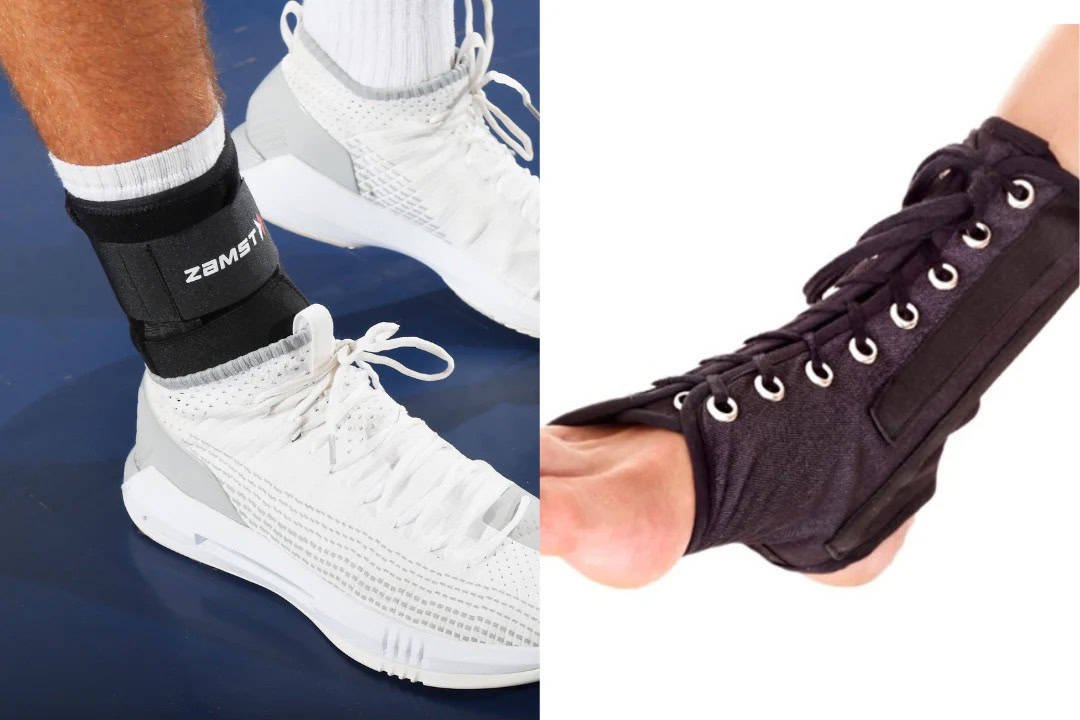
Neoprene sleeves offer light compression and warmth but limited structural support. Lace-up models provide stronger stabilization and adjustable tension, which allows wearers to customize the level of support according to their comfort and the demands of their particular activity. Hinged braces deliver the highest level of protection, which is why they are often used during rehabilitation from injuries or in high-contact sports where the joint faces significant stress. The best choice depends on your specific needs.
Fit, Comfort, and Breathability Matter
A brace that feels uncomfortable will end up sitting in your gym bag instead of protecting your ankle. Look for products with moisture-wicking materials, anatomical shaping that conforms to your foot, and secure closure systems that prevent shifting during activity.
Sizing accuracy is equally important – a too-loose brace provides almost no benefit, while one that is too tight can restrict blood flow and cause numbness. Many leading designs in 2026 feature lightweight composite materials that rival the thinness of a standard sock while delivering serious structural integrity. Just as the physical demands placed on legendary athletes like the greatest quarterback in NFL history required top-tier equipment, your ankle protection should match the intensity of your activity level.
How Modern Ankle Braces Combine Protection with Performance
Research has thoroughly disproven the outdated notion that wearing a brace limits athletic performance. Studies confirm that well-designed braces barely affect speed, agility, or jump height. Modern braces use reactive elements that stay flexible but stiffen instantly under dangerous forces.
This adaptive response closely mirrors the body’s own natural protective reflexes, except that it reacts considerably faster and proves far more reliable when sudden, unexpected forces threaten to cause injury. Athletes can therefore wear these supports during both practice and competition without feeling restricted in any way.
Advances in material science have also expanded what is possible. Carbon-fiber polymers, medical-grade silicone grips, and 3D-knitted textiles offer strength, comfort, and durability unavailable to earlier athletes. These advances ensure a precisely tailored solution exists whether you are recovering from surgery, resuming sport, or playing casual soccer.
Protecting Your Ankles Is Protecting Your Active Future
Ankle injuries do not just hurt in the moment – they reshape how you move for years to come. Selecting the right brace is an investment in lasting joint health, athletic longevity, and everyday confidence. Today’s technology makes finding a comfortable, natural-feeling brace easier than ever.
Take the time to carefully assess your activity level, thoroughly understand the personal risk factors that apply to your specific situation, and then select a product that has been built with genuine engineering and thoughtful design behind it. Your ankles support you through every stage and activity of life. Your ankles, which bear the full weight of your body through every step you take and every movement you perform throughout your entire life, truly deserve a level of protection that fully matches, in both quality and reliability, the immense importance they hold in your daily existence.
Frequently Asked Questions
What makes ankle joints so vulnerable to injury during sports activities?
The ankle joint bears the full weight of every step, jump, and sudden change of direction, making it one of the most vulnerable structures in the human body. During sports activities, the complex arrangement of ligaments and tendons faces extreme stress from unpredictable movements and impacts. This is why many athletes suffer preventable ankle injuries.
What advanced ankle brace technology should I look for to get better protection than basic supports?
Modern ankle protection has evolved beyond simple compression sleeves into advanced systems that adapt to your movement. Innovative ankle braces now offer intelligent stabilization, giving protection without limiting natural mobility. You should look for braces that respond dynamically instead of just restricting movement.
Why should I wear ankle support even if I haven’t injured my ankle yet?
Ankle supports work as a preventive shield by strengthening ligaments and tendons during high-stress activities. Prevention is always better than recovery, as even a minor ankle injury can take weeks to heal and increase the risk of future injuries.
How have ankle supports evolved from older designs to modern performance-friendly options?
Older ankle supports were bulky and uncomfortable, but modern designs are lightweight and performance-friendly. Today’s ankle braces focus on providing support while allowing natural movement, rather than completely restricting the joint.
How can chronic ankle instability affect other parts of my body?
Chronic ankle instability can impact your entire body. When your ankle repeatedly gives way, it changes your walking pattern and puts extra stress on your knees, hips, and lower back. This can lead to long-term musculoskeletal issues.